science fiction author, beatmaker, against fascism

Author: J.D. Moyer Page 100 of 106

J.D. Moyer is a science fiction author and electronic music producer from Oakland, California.

Radical Work Autonomy In Marriage

Want to experience zero-G marriage?

Kia and I have recently stumbled across a principle that has significantly altered (for the better) our dynamic regarding who does what work and how we each feel about it.

To be clear, I’m not talking about the work of marriage.  Honestly, I don’t think being married to somebody should be that much work.  It should be fun (at least most of the time), and relatively easy.  The real work is finding the right person — someone you love for who they are, someone you feel relaxed around, and someone you’re physically attracted to (and vice versa in all cases — which is sometimes the harder bit).

What I’m talking about is the work in marriage; who takes out the trash, who does the dishes, who takes care of the kid, and so forth.  Most of this work exists for single people as well, but if you’re married (or live with your romantic partner) then questions surface — questions of division of labor.

Secret Balance Sheet — A Dysfunctional System

Keeping track in your head?

Division of labor is often a source of conflict in a marriage.  A common dynamic is for one (or both) partners to feel like they are doing more work, or more valuable/important/difficult work, than the other person.  Maybe they have a secret balance sheet in their head, on which they are constantly accruing credits on their own side and debits on their partner’s side (or it is the other way around? — I always get those accounting terms mixed up).  If each partner has a secret balance sheet (one that is never discussed), then there’s never any chance to reconcile the two.  A giant blow-up argument is inevitable; the secret balance sheets are eventually brought out into the open and are found to differ massively.  The “you owe me” dynamic is destructive — it leads to resentment on both sides of the relationship.

Do you know any couples where one person supported the other one financially through a degree program, and then as soon that person graduated they dumped the partner that supported them?  From the outside it looks cruel and callous; the student who was being supported was obviously just using the other person, right?  Well, maybe.  But an alternate interpretation is that after graduation, the secret balance sheets were compared, and didn’t match.  The partner who was being supported financially was presented with a gigantic “you owe me” bill which didn’t line up with their own view of things.  Perhaps they felt that while they were in school, being financially supported, they were contributing to the relationship in other ways.  Or maybe they felt that because they were working so hard, things must have somehow been equal in the relationship.  When they suddenly realize that the other partner has been expecting something in return for financially supporting their broke ass for all these years, they freak out.  Faced with the giant debt, they bail.

I’m not trying to justify the behavior of either partner in my hypothetical situation — I’m just saying that the secret balance sheet method is a bad system — one that leads to disappointment and heartbreak.

Open Balance Sheet — A Less Dysfunctional System

A somewhat healthier dynamic (which I think describes my work-sharing dynamic with Kia before we discovered our new principle) is to communicate regularly about who does what and who is responsible for what, in essence frequently reconciling the balance sheets.  Thus, no hidden debts accrue.

This kind of arrangement can exist with varying degrees of symmetry.  Maybe one partner contributes more money, and the other contributes more household work (childcare, cooking, cleaning, shopping, social planning, vacation planning, handling finances, etc.).  Kia and I both work — she earns a bit more hourly but I have more passive income (from music royalties), so we contribute the same amount of money to our household fund.  On the other hand, she spends more time with our daughter (two-year-old girls tend to be slightly more focused on mommy — I try not to take it personally) so I try to make up for that by doing more cleaning, and more household organizing.  It doesn’t really matter what the division of labor is, as long as neither partner feels like they’re getting the short of the stick.  It’s important to remember that 1) there’s a built-in efficiency boost to co-habitating; if you didn’t live with someone you’d both be taking out the garbage and paying the electricity bill, and 2) some degree of asymmetry is probably a good thing; what is difficult for one person might be easy for the other.

Sounds like a pretty good system, right?  It is — but with the extra work generated by parenthood, Kia and I would still sometimes get irritated or snippy with each other around work issues, despite the fact that both of us were working hard.  Was there just too much work to do?  Maybe some disharmony is inevitable for parents of a young child (or children) who also both work, and who also both have artistic pursuits.

Origins of the Principle — Home Improvement

The prequel to our new work-sharing principle came about as we were contemplating our long list of home improvement projects.  We were making very slow progress on our list, while at the same time constantly adding new items.  We’re in the process of converting our garage into an office for Kia (so that Kia’s current office can become a bedroom for our daughter).  It’s a lot of work, but our logic was that it would be easier and cheaper than selling our house and buying a bigger one.  The logic still holds, but the project has been dragging on for many months.  In addition to that project, the house needs painting, the deck needs some work, the gate needs fixing, and so on and so forth.  There’s no end to it.  We started to feel overwhelmed.

In response to these negative feelings, we devised three principles of home improvement, as follows:

  1. Only do one disruptive project a time. For example, don’t try to remodel the kitchen and the bathroom at the same time.  Regain total functionality in one area before tearing up the next thing.
  2. Make it better than it was before. You’d think this would be obvious.  It’s home improvement, right?  But sloppy work is all too common.  Spesh has dubbed the previous owners of our house “The D.I.Y. couple”; there is evidence of sloppy paint jobs, unfinished mouldings, unevenly placed electric outlets, etc.  This principle helps us resist the urge to rush jobs just to “get them done.”
  3. Only do what you feel like doing. The list will never be completed.  All houses are in a constant state of decay, and all you can do is stem the tide.  Keeping this in mind helps take the pressure off.  Each person can work on whatever they want to work on — whatever they feel like needs doing.

We found ourselves enjoying the last principle in particular.  If one of us feels like painting, we put on our painter pants and pick up a brush.  No artificial deadlines, no schedules, and no nagging.  Do what you feel.

We’re making progress at the same rate as before, if not slightly faster.  I’m not sure when exactly, but I’m confident that our daughter will eventually have her own bedroom.  If she starts demanding it sooner, we may hand her a paint brush.

An earlier home improvement project — The Light Bar (designed and constructed by Dave Shanks and featured in Ready Made magazine)


Getting To The Principle

Recently, for various reasons, Kia was thinking about the term “guilt-tripping” and what it meant exactly.  She asked me for my definition, which resulted in the following conversation (this version is much condensed):

Me:  ” ‘Guilt-tripping’ is what you do when you want the other person to want to do something, as opposed to just asking them to do it.”

Her:  “Do I do that?  Do I guilt-trip you?”

Me:  “Yeah.  Sometimes.”

Kia has an unusual, one might even say preternatural, to instantly change her behavior once she makes up her mind to do so (I, on the other hand, usually have a time-delay of one to ten years).  Kia completely stopped guilt-tripping me from that moment forward.  Instead, if she wanted me to do something, she would just ask me to do it, politely and directly.  Usually I don’t mind doing something even if I don’t want to do it, so the new dynamic worked better (much more so than the previous dynamic, wherein she would drop hints about what she wanted me to do, and I would miss or ignore those hints, and then be confused as to why I was in trouble).

This was a big step towards our new principle, but we weren’t quite there yet.  We arrived at the other half of the equation when I recently asked her if she could finish putting away some dishes I had just washed.  I’d been pulled away from my dish-washing task mid-stream — some time-dependent errand I needed to run (I forget what) — but I really wanted to job to be completed (in a slightly OCD kind of way).  Since I had to run off and do something else, I asked Kia if she could finish the task for me.  I may or may not have said please.

Be very glad they are smaller than you.

I returned from my errand (whatever is was) to find the dishes not yet put away, and my wife feeling resentful about the request.  She explained why.  It has gotten dark in my absence, and Kia had felt nervous about working downstairs in our wide-open-to-the-jungle house (we’re temporarily living in Costa Rica).  It wasn’t an unreasonable fear; we had already sighted howler monkeys and agouti nearby, giant jungle rats running through the kitchen, and one morning we found a paw print on the table (either dog or jaguar — the two look remarkably similar).  In addition to the jungle proximity issue, she had witnessed a horrifying drama unfold on the kitchen counter; a live moth being forcibly dismantled by large black jungle ants.  We have since moved to a beach house.  In any case she had felt the burden of my request quite heavily.  It hadn’t helped that I had delivered it a little tersely.  In my mind it was just an off-hand request, a preference — no big deal if she didn’t feel like doing it.  But she had perceived the request with more weight, and was a little upset.

We talked about it, and came to a joint realization.  It’s a drag to have someone else control your agenda, even a little bit.  I had tried to use Kia’s work units as my own, assigning a task the way I might assign a task to myself.  In the process, I had circumvented her work autonomy.

Not that different.


The Breakthrough Principle

Psychologists who study motivation have known for a long time, via numerous, oft-replicated experiments, that one of the best ways to motivate a person is to give them more autonomy.  People, in general, like to work.  They especially like to contribute and to feel needed and appreciated by their peers.  What they don’t like is to be told exactly what do, how to do it, and when to do it.

The same is true in marriage.  Unless you’re married to a lazy bum or a mammoni, your partner probably likes to work; to contribute to the household.  They also have a strong desire to do it — the work — their way.  Nobody likes being micro-managed (or even managed, when it comes down to it).

So what’s the principle?

Both partners are free to do, or not do, whatever work/tasks they feel like doing, when they feel like doing them.  Asking your partner to do something is allowed, but only as you might ask a friend (politely), and the other person is free to cheerfully decline without fear of repercussions.  No guilt-tripping, delegating, or nagging allowed.  Do what you feel.  Radical work autonomy.

So How Does It Work?

Pretty well, so far.  It’s not that there isn’t a balance sheet — of course there is.  We’ll still have conversations about who is responsible for what — a constantly moving target.  So it’s not that different from the Open Balance Sheet method discussed above.

What’s different is the moment-to-moment dynamic.  There’s a new respect for the other person’s emotional state, in regards to work.  Sometimes a person is out of willpower, and the smallest request can feel like a giant weight.  So now … there’s more slack.  What if something needs doing and nobody feels like doing it?  Usually someone steps up.  If not, it gets done later, or maybe it didn’t really need doing.  Sometimes tasks just go away.

For the most part, I think we’re more efficient.  What needs doing gets done more easily, and we have more energy and attention to do what we enjoy, and to enjoy each others’ company.  There’s definitely less resentment and struggle around division of labor issues.  It’s like R.O.W.E. for the home — you immediately weed out the bums (neither of us, fortunately), and after that it’s all increased productivity and happier people.  It’s free freedom.

I don’t mean to imply that we’ve discovered some kind of magical, argument-free zone in which we live in perfect harmony, subtly communicating our preferences with loving non-verbal signals and sharing the household work with perfect equality and efficiency.  That would be a little too precious, wouldn’t it?  Nah, we still sometimes bicker and get irritated with each other.  But there has been a real breakthrough — a mutual realization that any attempt to delegate, manage, or in any way control the other person’s work autonomy is going to backfire.  Of course we still ask each other to do things (very politely).  Of course we each have a different awareness of what needs to get done in certain areas.  But we’ve committed to abandoning the habit of directing each others’ actions.  We still backslide at times, but we catch ourselves at it (or call each other on it) more often than not.

Freedom In Marriage

It’s a truism that what you sacrifice for the stability, comfort, and warmth of marriage (or any long-term, committed, intimate relationship) is freedom.  A more nuanced view is that each couple decides how much freedom they want to grant each other in each area of life.  Turning up the freedom dial in a given area usually has both costs and benefits.  If you crank up the sexual autonomy dial (open marriage, to whatever degree) then you might gain excitement and the thrill of sexual novelty, but the cost might be jealousy, emotional distance, and long complicated conversations about what is and isn’t allowed and how everybody is feeling (what The Ferret calls “the sex bureaucracy“).  If you turn up the spatial/geographic autonomy dial, perhaps living in different houses (or even different cities), or traveling separately for extended periods of time, then you might experience alienation, or just drifting apart (“separate lives” — that’s probably what happened to Al and Tipper).

The work autonomy dial seems to operate differently.  I don’t see what the costs are when you turn this one up; they’re illusory.  If you’ve married a person who likes to contribute and feel needed (and most people do — watch the video below), then the work still gets done.

So why not crank the dial to eleven?

Jaguar Rescue Center (with baby sloth videos)

An incredibly cute baby three-toed sloth; these guys are responsible for a significant percentage of Costa Rica's eco-tourism industry.

I’m currently living in Costa Rica with my family, near Puerto Viejo, in the midst of a working abroad experiment (we’re calling it a “workation”).  Recently, on the recommendation of several friends and acquaintances, we visited the Jaguar Rescue Center.  This unique organization, started by a herpetologist and a gorilla expert, functions to rescue and rehabilitate injured, mistreated, and/or confiscated animals from the local area.  During our tour we met baby howler monkeys and baby sloths who had fallen from the trees (otherwise a death sentence for both types of animal), snakes discovered by residents who would have otherwise met the sharp side of a machete, big cats rescued by customs agents otherwise destined for lives as leashed pets in Kuwait, a baby cayman discovered in a local creek, and numerous frogs, who, as far as I could tell, were just enjoying the giant, lily-pad covered pond.

A young ocelot -- note the giant eyes for night hunting. He looks cute, but this guy recently went after a large dog.

The Jaguar Rescue Center is not-for-profit, and receives no government support.  They’re not really part of the eco-tourism industry (though they of course attract eco-tourists); their mission is solely to protect and heal at-risk animals and help them return to their natural lives in the jungle.  The cages open at least once a day (or night, for the big cats) to allow the animals to leave if they wish.  Some leave and then come back for a time, like the young orphaned jaguar who had never had a mother to teach him not to hunt porcupines.  He slunk back to the rescue center to recover from a faceful of quills, then left again, a fully healed and much wiser beast.

It's always nice when someone feels comfortable around you.

The baby howler monkeys regularly interact with a couple of local troops who live in the nearby trees, and eventually leave the rescue center to join one of them (usually monkey romance is the deciding factor).  One feature of the tour is the option to enter the cage where the baby howler monkeys hang out, and let them climb on you.  They’re quite friendly and fearless, and immediately clamber onto the visitors.  One of the monkeys started chewing on one young woman’s hair.  I was used more like a tree branch, as you can see in the picture.  It’s a strange feeling to have a monkey hanging off of you, supported only by its tail wrapped around your neck.  Not uncomfortable, but weird.  Those tails are incredibly strong.

Lying in the food bowl = acceptable sloth table manners (youtube video below).

The baby sloths were the highlight of the tour, especially for our two-year-old daughter.  As you can see, they’re cute.  Really cute — cuddly and adorable.  The two-toed sloth (the orange one), has a peak of fur on its back that helps the rainwater drain off.  It looks just like a faux-hawk.

Both sloths and monkeys often get injured in power lines.  There have been efforts to get the government to install “collars” at the base of the power line poles to prevent animals from climbing them, a relatively cheap fix that could save hundreds of animals from life-threatening burns.  You would think the Costa Rican government, with its generally strong commitment to protecting the environment and supporting eco-tourism, would be all over this.  Evidently there is still progress to be made.  I can hardly be critical, coming from nation that has just hosted what might be the worst environmental disaster of all time, but I’m glad the Jaguar Rescue Center is working hard to protect the stunningly beautiful wildlife of Costa Rica.

Unfortunately their website doesn’t have an easy way to donate, like a Paypal button or credit card form, but if you feel moved to support their efforts I hope that doesn’t discourage you.  Give them a call and arrange a donation.  And if you’re ever in the Puerto Viejo area, by all means do the tour.  It’s informative, fun, and monkeys might chew on your hair.


What is Metaprogramming?

John C. Lilly, the only scientist to have two horror films based on his life.

For a number of decades I’ve been interested in self-improvement via a method I like to call metaprogramming.  I was first exposed to the term via John C. Lilly’s Programming and Metaprogramming in the Human Biocomputer (a summary report to Lilly’s employer at the time, The National Institute of Mental Health [NIMH]).  Lilly explored the idea that all human behavior is controlled by genetic and neurological programs, and that via intense introspection, psychedelic drugs, and isolation tanks, human beings can learn to reprogram their own computers.  Far out, man.

As the fields of psychology, neurophysiology, cognitive science have progressed, we’ve learned that the computer/brain analogy has its limitations.  As for psychedelics, they have their limitations as well; they are so effective at disrupting rigid mental structures (opening up minds), that they can leave their heavy users a bit lacking in structure.  From my own observations, what the heavy user of psychedelics stands to gain in creativity, he may lose in productivity, or stability, or coherence.

Those issues aside, I still love the term metaprogramming.  We are creatures of habit (programs), and one of the most effective (if not only) way we can modify our own behavior is by hacking our own habits.  We can program our programs, thus, metaprogramming.  This is a slightly different use of the term than Lilly’s; what I call metaprogramming he probably would have called selfmetaprogramming (he used metaprograms to refer to higher level programs in the human biocomputer; habits and learned knowledge and cultural norms as opposed to instincts and other “hardwired” behaviors).

Effective Metaprogramming

Effective metaprogramming requires a degree of self-awareness and self-observation.  It also requires a forgiving attitude towards oneself; we can more clearly observe and take responsibility for our own behaviors (including the destructive ones), if we refrain from unnecessary self-flagellation.

Most importantly, effective metaprogramming requires clear targets for behavior.  In my experience, coming up with these targets takes an enormous amount of time and energy.  It’s hard to decide how you want to behave, in every area of your life.  It’s much easier to just continue on cruise control, relying on your current set of habits to carry you towards whatever fate you’re currently pointed at.

And what if you pick a target for your own behavior, implement it, and don’t like the results?  Course corrections are part of the territory.

Religion (Do It Our Way)

If you don’t want to come up with your own set of behavioral guidelines, there’s always someone willing to offer (or sell) you theirs.  Moses, lugging around his ten commandments, or Tony Robbins, with his DVDs.

Looks like we might be down to five commandments.

Religion has historically offered various sets of metaprogramming tools; rules for how to behave, and in some cases, techniques and practices to help you out (like Buddhist meditation). If you decide to follow or join a religion, you have to watch out for the extra baggage.  Some religions come with threats if you don’t follow the rules.  The threats can be real (banishment from the group), or made up (banishment to Hell).  Judaism is perhaps the exception; there are lots of rules but the main punishment for not following them (as far as I can tell) is that you simply become a less observant Jew.

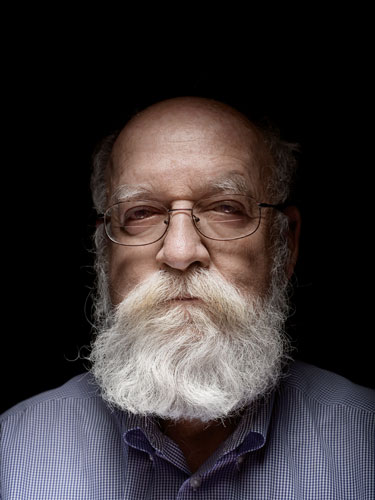
I’m an atheist, more or less, and a fan of the scientific method and scientific inquiry.  I also appreciate the work the philosopher/evolutionary biologists Daniel Dennett and Richard Dawkins, both of whom have taken up strong stands against organized religion.  These stands are excusable, insofar as they attack outmoded religious beliefs (creationism, the afterlife, inferiority of women, and so forth) or crime (like the abuse of children by priests — Dawkins is actually trying to arrest the Pope).  But religion offers much more than belief, and in some religions (like Judaism) belief matters very little.  Religions offer behavioral systems, practices, rituals, myths, stories, and traditions, all of which are tremendous, irreplaceable cultural resources.

Daniel Dennett, aka Santa Claus.

Some religions are attempting the leap into modernity.  The Dalai Lama has taken an active interest in neuroscience.  My wife’s rabbi is a self-proclaimed atheist.  The Vatican has put out a statement suggesting that Darwinian evolution is not in conflict with the official doctrines of the Catholicism (a nice PR move, but in my opinion it’s only because they don’t fully understand the principles of Darwinian evolution — Daniel Dennett called Darwin’s idea “dangerous” for good reason).  In the long-run, religions are institutions, and they’ll do what they have to in order to survive.  The term “God” will be redefined, as necessary, to keep the pews warm and the tithing buckets full.  Evolutionary biologists (with their logical, literal thinking) are tilting at windmills when they attack religion; they are no match for the nimble, poetic minds of theologians.

As much as I value religions in the abstract, I haven’t yet found one I can deal with personally.  My wife finds the endless rules of Judaism to be invigorating; following them gives her real spiritual satisfaction.  I find them to be bizarre and confusing (maybe this is because I’m not Jewish, but I suspect some Jews would agree with me).

Still, I have liberally borrowed from the world’s religions while devising my own metaprogramming system.  Jesus’s Golden Rule.  Islam’s dislike of debt.  A good chunk of the Buddha’s Eightfold Path.  And at least a few of the Ten Commandments.

Help Yourself

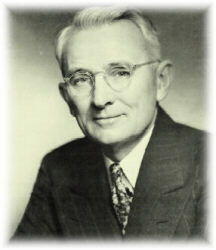
Want to win friends and influence people? Change the spelling of your last name to match that of a world-famous captain of industry!

The self-help movement has been around at least as long as Dale Carnegie.  Decades later, the psychedelic and cross-cultural explorations of the 60’s (Richard Alpert hanging out and dropping acid with Indian gurus, Timothy Leary dropping acid and reading The Tibetan Book of the Dead, Werner Erhard experimenting with Zen Buddhism) added fuel to the fire of the self-help movement.  East meets West meets L.S.D. = Total Transformation of the Human Psyche!  We all know how that turned out.

The modern self-help movement has had its share of both inspired individuals (like Tony Robbins) and charismatic but ultimately abusive (like the late Frederick Lenz).

I’m a fan of Robbins, for example, because his teachings are open (he does sell products and seminars, but he also gives away an enormous amount of content).  Same goes for Steve Pavlina, Les Brown, and even Timothy Ferriss.  All offer up their own insights and behavioral modification (metaprogramming) systems with a “try this and see if it works for you” attitude.  It’s clear they are interested in spreading their message first, in making a living second, and not at all interested in controlling people or accumulating subjugates.

I’m also fascinated by the late anti-guru U.G. Krishnamurti (not to be confused with the more popular J. Krishnamurti).  U.G., by all accounts, was unequivocally an enlightened being.  The interesting bit was his absolute refusal to attempt to teach, pass on, or even recommend his own higher state of consciousness.  Throughout his life, he refused to take on any followers or officially publish any of his writings.  I’ll write about U.G. in more detail in another post.

Frederick Lenz -- charismatic but mad as a hatter.


Sinister Intentions

At the unfortunate intersection between religion and self-help lies the world of cults.  Cult leaders and cult organizations can be spotted by the following attributes.  Stay away!

  • secret, often bizarre teachings
  • brainwashing techniques (sleep deprivation, emotional trauma, isolation, sensory overload)
  • enormous fees required for membership and/or access to teachings
  • requirement to cut off contact from family and/or friends (nonmembers)
  • use coercive methods to control their members (intimidation, blackmail, even violence)

NEVER challenge a hack sci-fi writer to invent a religion -- he might succeed!

Cults often seduce new members by offering up simple, effective metaprogramming techniques.  Scientology offers “clearing,” a method of reliving painful emotional experiences and thus removing their negative subconscious influence.  There’s nothing wrong with clearing — the problems come later, when you’re maxing out your credit cards and babbling on about “operating thetans.”  Frederick Lenz instructed his followers in chakra meditation.  The young, impressionable, and idealistic are especially vulnerable to seduction by cults, but these dangerous organizations are easy to spot if you know what to look for.  They’re not looking to spread a message of truth, love, and higher consciousness; they’re looking for subjugates.

There’s nothing wrong with using somebody else’s self-improvement/behavioral modification/metaprogramming system, either ancient or modern, in whole or in part, as long as you shop around carefully.  Or, you can invent your own.  As a third alternative, if you are already happy with the current state of your habits (and where they are steering you in life), you may not feel compelled to bother with changing yourself.

Baby with the Bathwater

The field of self-improvement is full of half-truths, hucksters, pseudoscience, charlatans, snake oil and snake oil salesmen, bizarre beliefs, true believers, smelly hippies, narcissistic baby boomers, pitiful cases, get-rich-quick schemers, crystal wavers, cult leaders, and weird dieters, and is thus always ripe for parody (my favorite is this video parody of The Secret).  A down-to-earth, rational person could be excused for steering clear of the self-improvement realm altogether.

On the other hand, energy we invest in improving our own habits (programs), including habits of thought and perception, is probably one of the best investments we can make in our own lives.  Even minor improvements can yield enormous dividends in the long-run.

I’ll continue to share my thoughts about metaprogramming in this blog, including my core metaprogramming principles (not as a prescriptive, but rather in the spirit of open-source code sharing).  As a quick preview, I’ll offer that my own principles involve the following areas:

  1. Maintaining a High Quality of Consciousness
  2. Taking Radical Responsibility for All Your Actions, and Every Aspect Of Your Life
  3. Creating a System of Functional Vitality

Working Abroad Adventure: Week Two-And-A-Half

A view from the beach, which could benefit from a two degree rotation in Photoshop.

I’m in the midst of a six week “working abroad adventure.”  The idea: rent a house in the jungle on the Caribbean side of Costa Rica, and attempt to do and deliver all our work remotely (Kia is a motion graphics artist, I co-run Loöq Records, do freelance database consulting work, and write fiction).  Why?  To change things up a bit, to break up our normal routines, and to experience a change of scenery and culture.  It’s a “workation”; a vacation without the giant financial hit, and without the risk of boredom from too much beach and hammock time.  If it’s not already obvious, we both like our work — this is not some version of Tim Ferriss’s 4-Hour Workweek (though we were inspired by his book).

The Good News

The girls.

I’m happy to report that approximately two weeks into our trip, we’re getting some work done, and appreciating the natural and cultural gifts that this beautiful part of Costa Rica has to offer.  Every day we take a trip down to the beach; we tend to hang out on an idyllic stretch in front of the Caracola Hotel with calm water and tidepools teeming with life.  We feast on fresh mango and papaya, local grass-fed beef, fish caught hours ago in the Caribbean, and drink the best coffee I have ever tasted (with extra-healthful Costa Rican milk).  At night we listen to the sound of rain on our roof, and in the morning are awakened by the sounds of howler monkeys, toucans, and parrots.  On clear nights we look up at a sky densely packed with stars, and during one evening walk encountered a living Christmas tree, a giant black silhouette lit up by lightening bugs, blinking on-and-off.

Mentally, I feel awake, alive, and engaged.  Emotionally, I feel powerful love for my wife and daughter, and more closeness with my parents, brother, in-laws, and extended family.  I feel love and appreciation for my friends even though I’m far away from most of them.  In the broadest scope of my life, I feel like I have expanded the realm of what is possible and doable.

Have there been hard times?  Definitely, and I’ll go into those, but I wanted to start with the positive.  I’m glad we decided to go on this adventure; I don’t regret the decision.

The Client

In my last post I mentioned my choice to not inform all my clients that I would be temporarily relocating to a house in the jungle on the Caribbean side of Costa Rica.  One client had requested a face-to-face meeting, and I wasn’t sure how to handle the request.  Turns out the problem went away; I had already informed another person at the organization about my trip (and then promptly forgotten).  I haven’t had a single complaint about my unilateral decision to work remotely for six weeks.  I imagine some of them are withholding judgment for the moment; can J.D. get the job done from anywhere?  If so, no problem.

But Can I Get The Job Done?

Brain coral.

My productive output has suffered a precipitous drop, by any measure.  We have childcare a few hours a day, at most (from my mom, who decided to visit us here and rented a place down the road, or from a local babysitter we met recently who our daughter fell in love with).  The rest of the time we trade off, or do activities as a family.  We both try to work efficiently during the times our daughter is being cared for, or sleeping, but there is no shortage of distractions.  If we try to work in the evening we get attacked by mosquitoes (we’re only really safe in bed — under the mosquito net).  We’ve also had a number of internet and power outages that bring our work to a screeching halt.  There’s also the temptation to go the beach instead of working, or just lie in a hammock and read a book.

Despite these challenges, we’re getting some work done.  This aspect is harder than I expected, but not harder than I should have expected.  I knew most of the variables going in.  The key for me is setting a few clear, achievable goals for each day.

Fixing the Internet

Sometime into our second week, our internet went down.  If you read my previous post, you’ll know that our only connection to digital civilization, our clients, Skype, etc. was a mysterious ethernet cable, encased in a plastic tube, disappearing into the jungle.  Three days of biking down our rocky road to the Art Cafe several kilometers away was proving inconvenient (though it’s a great place to work — beautiful women serve you delicious fruit drinks while you bask in the wi-fi).  Finally, I decided to investigate, and followed the cable across our yard and through a dense tropical thicket.  The cable snaked upward through the trees, eventually joining some power cables and crossing the road towards our neighbor’s place.  From my vantage point amidst the palms I could only see a large Bob Marley flag, and a high, densely-constructed wooden gate.

Land crab (far from ocean) in front of our jungle house.  Trying to slice our internet cable?

I shared the results of my reconnaissance with Kia, as well as my plan to regain our connectivity.  I would attach the cable directly to my laptop, type in the router address directly into my browser, hack into the administrative control page, and then do a remote reboot.  That’s what I do at home when the internet doesn’t work — I reboot the modem and the router — it seemed worth a try in any case.  My plan worked up to a point, I did in fact navigate my way to the user and password prompt for the router.  I typed in numerous iterations of admin, user, bob, marley, jah, one, reggae, nation, love, etc. … all to no avail.

Kia eventually took a more down-to-earth approach, going next door and introducing herself to the neighbor, a Tico woman renting the place.  The nice lady let Kia enter her home and turn her power strip off, and then on.  Internet service restored.

Out of the Frying Pan …

One morning I woke up with a headache, feeling weak and utterly lacking in energy.  I recovered quickly enough with coffee, water, some vitamins, and breakfast, and wrote off the episode to mild dehydration and overexertion.  Two days later I experienced the same symptoms, combined with drowsiness, foggy-headedness, sluggishness of limb, irritability, and a dry cough.  Do you suspect malaria?  Some of the symptoms match.  It crossed my mind too, but the incubation period for malaria is quite long, and the disease is rare in Costa Rica except near banana plantations.  I think what I experienced was DEET toxicity, especially considering that the onset of symptoms in both cases occurred within six hours of applying a repellent cream containing DEET directly to my skin.  I’m fully recovered now, but it was a nasty experience.

I generally try to avoid applying poison directly onto my skin, but the mosquitoes really love my blood (as does the Red Cross, but at least they don’t inject me with an itch-inducing digestive enzyme right after they withdraw my O positive).  I had over 100 itchy, red bumps, mostly on my feet, calves, and forearms, before I resorted to DEET.

Turns out DEET is a potent neurotoxin, and can cause genetic damage.  Severe cases of poisoning can result in disorientation, incoherence, tremors, seizures, respiratory failure, delusions of grandiosity, and death.  We’ll never use it again.  Currently I’m experimenting with an herbal alternative; a strongly brewed local peppermint tea spritzed directly onto exposed skin — it seems to be working so far — no new bites yet.  Update: not only does the mint tea spritz not work to repel mosquitoes, the mosquitoes added insult to injury by landing in our open saucepan of mint tea, apparently to lay their eggs.

As a side note, it’s possible my regular intake of the local Pilsen brew might have something to do with my attractiveness to the bloodsuckers.

What we really need around here is one of Nathan Myhrvold’s mosquito lasers (or click here for the full TED talk — fascinating).

Leaps and Bounds

Our two year old daughter is enjoying life in the jungle.  She loves looking at the lizards, frogs, monkeys, butterflies, and birds, and for some reason the mosquitoes don’t like her (maybe because she doesn’t drink beer, or maybe it’s that she never stops moving).

In front of Pirripli market.

The locals kids here are really independent.  It’s not uncommon to see a little kid, three or four years old, walking alone on the road to run an errand.  Our daughter is picking up some of that can-do attitude, and is learning to swim (or at least splash around) in the ocean (when we arrived she was terrified of the surf — she didn’t want to be put down anywhere near even the smallest of waves).  She’s also lost her fear of dogs (she used to hide behind momma’s leg when approached by a friendly Labrador; now she will calmly put her shoes on next to a dozing Pit Bull).  I think and hope she’ll remember the time we’re spending in Costa Rica, with all the novel sights and sounds.

The Big Picture

Off to the lavandería.

We’re slowly getting it together.  We have a house, two bicycles (one in need of repair), internet (that works most of the time), and a babysitter.  We buy our groceries at the Pirripli market, and get our laundry done by a friendly Jamaican woman down the street (Bet-El lavandería).  We’ve enjoyed delicious meals at Jungle Love, Bread & Chocolate, and Soda Johana.  Tomorrow morning we’re going to visit the Jaguar Rescue Center and get a closer look at some of the wildlife.

Is the working abroad experiment working?  I’m not sure yet.  Life is physically harder than I’m used to, but I’m fitter than I’ve been in years (and not quite as pale).  There have been moments of extreme stress, but at least as many sublime experiences.

It might have been a better choice, at least for me personally, to have arranged a break from my consulting work and just focused on my creative work.  But if I’d done that, I might be worried about money, considering this is such a long trip.  On that point, I think I’ll need hindsight for clarity.

Gecko!

Leaf-cutter ants (click for video)

30 Day Experiment – Be More Lucky

We must believe in luck. For how else can we explain the success of those we don't like? - Jean Cocteau

Today launches a new 30-day experiment, during which I will try to be more lucky. I’m basing the experiment on the research of Dr. Richard Wiseman, who, starting in the 90’s, conducted a series of experiments investigating the nature of luck, and whether or not being lucky was a trainable skill (he concluded that it was).

This article by Wiseman explains his experiments and results succinctly.  Wiseman’s “lucky” subjects would probably would fare no better at games of pure chance than the rest of us, but they have better fortune in life.  Opportunities fall into their laps, they seem happier, they know all the right people, and so on.  Who wouldn’t want a bit more luck juice to sprinkle on their fate?

From his research, Wiseman concluded the following about his lucky subjects:

“They are skilled at creating and noticing chance opportunities, make lucky decisions by listening to their intuition, create self-fulfilling prophesies via positive expectations, and adopt a resilient attitude that transforms bad luck into good.”

A nice cake, if you can bake it.  But how do you get from here to there?  How do you turn an unlucky person into a lucky one?  Wiseman prescribed various exercises to help his less fortunate subjects develop the necessary attitudinal traits.  After following the simple exercises for a month, the less-lucky subjects reported dramatically better luck; fewer mishaps and more happy coincidences.  Wiseman’s exercises were along the following lines (in his own words):

  • Listen to your gut instincts – they are normally right.
  • Be open to new experiences and breaking your normal routine.
  • Spend a few moments each day remembering things that went well.
  • Visualize yourself being lucky before an important meeting or telephone call. Luck is very often a self-fulfilling prophecy.

In other articles, like this one from Forbes, Wiseman focuses on the social side of luck; luckier people have larger social networks (and keep them active, staying in touch with people).  He also notes that luckier people are far more observant than their less fortunate brethren; they are more likely to notice details outside of “what they are looking for,” and this serves them well.

If you view all the things that happen to you, both good and bad, as opportunities, then you operate out of a higher level of consciousness. - Les Brown

Self-Analysis

Where do I currently stand, on the luck spectrum?  I consider myself fairly lucky, with room for improvement.  I tend to have a good attitude and look on the bright side, but I’m not immune to occasional bouts of self-pity or gloomy pessimism.  I have a decently large social network, but I’m horrible at striking up conversations with strangers; I tend towards minding my own business (and even shyness at times).  I trust my gut more often than not, but sometimes plow ahead despite “having a bad feeling about it.”  I’m open to novel experiences and breaking my routine, but I’m spectacularly unobservant at times.

Customized Exercises

Every day in June, I plan to do the luck-building exercises below.  I’ve designed them to addresses my particular weaknesses, build my strengths, and be easy and fun enough to do every day.

  1. Principle: Focus on the positive / Exercise: Discuss and tweet favorite three experiences of the day
  2. Principle: Expand opportunity / Exercise: Talk to everyone — strike up a conversation at every opportunity
  3. Principle: Follow intuition / Exercise: Consciously consult “gut feeling” at all significant choice points
  4. Principle: Resilience / Exercise: When something “bad” happens, consider possible upsides (and refuse to be demoralized)
  5. Principle: Expand opportunity / Exercise: Observe and record (journal) at least three anomalous details every day

I don’t know if these exercises are perfectly designed, but I don’t think it matters.  They should get me going in the right direction.  It’s worth noting that the opportunity cost in each case is low; none of them take very much time or involve much risk (the possibility of initiating an awkward conversation seems real, but bearable).

Opportunity is missed by most because it is dressed in overalls and looks like work. - Thomas Edison

So far, the experiment is going well.  Hacking away at a coconut this morning, standing on slippery leaves in bare feet, I managed to not hack off my foot, and while stabbing at the inner shell with my Swiss Army knife, I miraculously avoided cutting off my finger when the blade suddenly jackknifed closed (I escaped with only a laceration, easily staunched with direct pressure and a number of Band-Aids).  This resulted in an opportunity to provide a safety lesson for my daughter, and elicited a tender outpouring of concern from both my wife and daughter, making me feel both loved and needed.  I’d say the day was off to an excellent start!

Page 100 of 106

Powered by WordPress & Theme by Anders Norén