science fiction author, beatmaker, against fascism

Author: J.D. Moyer Page 98 of 106

J.D. Moyer is a science fiction author and electronic music producer from Oakland, California.

Business Advice for (Young) Artists

Jondi & Spesh — Phreek Out EP (our first vinyl release on Loöq)

I recently finished compiling royalty statements for all the artists on Loöq Records, an activity I do twice a year.  Even with the custom database I designed specifically for the task, it’s difficult and takes a long time.  We receive reports from our various distributors — detailed spreadsheets with a row for every iTunes download, streaming music click, mobile ringtone, youtube view, etc.  I import these records into the database, crank the digital wheels, and churn out beautiful, detailed royalty statements for every artist and remixer who has ever had a release on our label (over a hundred different statements, and growing each reporting period).

I love this process — partly because I’m a database nerd, and partly because there are always a few artists in the bunch who receive unexpected, sizable payouts.  It’s fun to share that kind of news.

You may have heard that the music industry, and music labels especially, are dying a slow death.  This may be true for the big labels, but many of the independents (like us) are doing pretty well.  It’s true that people are buying less music, and that people tend to buy individual tracks instead of entire albums.  And piracy does have a negative impact, though it’s not as great as the RIAA would have you believe.  But the main reason for lower sales per release is that there are way more releases out there.  The digital floodgates are open — it costs almost nothing to put out a “record” these days.  So sales revenues for each release are, on average, lower.  But there are also unexpected new sources of income, like shared ad revenue.  For example, every time you watch a video on youtube.com that uses a Loöq Records track, that Loöq artist gets paid (after I compile and send out the royalty statements, that is).  Tracks also generate revenue (for both us and the artist) when we license them out for use on television shows, movies, video games, and commercial websites (if you’re interested in licensing a Loöq track, please get in touch).

CD cover of Jondi & Spesh “We Are Connected”

But for a young artist starting out, are things all that different than they were ten or fifteen years ago?  Now you can submit a track to a label, or two dozen labels, with a simple email (linked to an mp3).  When I was twenty years old I was sending cassette tapes in padded envelopes to music labels individually!  So some things are easier.  On the other hand, I would usually get a cash advance when I would sign a track, in addition to royalties.  These days, at least in the electronic music world, cash advances are rarer (though royalty rates are higher — Loöq offers 50% of gross sales and licensing, and that’s not uncommon).

So the business landscape has changed.  Artists have more power, as they have the option to go directly to consumers (skipping labels altogether).  Labels still have their place — they can expose artists to wider audiences, provide distribution outlets, and promote the artists’ work.  For the music consumer, labels act as a valuable filter (artists, myself included, can’t always tell when their work sucks and needs to be shelved).  On the other hand, some things remain the same.

Setting Yourself Up For Success

There are some things that artists (not just musicians, but also writers, visual artists, choreographers, all creative types) can do to increase their chances of success.  By “success” I mean fame and fortune — too often an artist achieves the first but misses out on the latter.  I’ll leave “artistic satisfaction” and other fuzzy elements out of the equation for now — those are too hard to quantify.

Tila Tequila — is that the kind of “artistic” career you want?

Blogging, tweeting, having a presentable website and a large online social network — these things can all have a positive impact.  But other areas are more important.  You don’t want to end up like Tila Tequila, do you? (Over a million MySpace friends but no artistic respect.)

I put “young” in parentheses because these ideas make sense at any age.  Young people might be more inclined to seek advice, but these days people are starting new careers at all ages (myself included).

Am I qualified to give advice?  To date, I’ve done a few things right, and I’ve had some great luck.  I’ve had releases on my favorite labels and I’ve had my tracks played by the DJ’s I respect most.  Over the years I’ve received tens of thousands of dollars in sales, performance, and licensing royalties.  Perhaps my musical success to date has been limited by my unwillingness to tour,  my reluctance to give up my freelance programming work (I enjoy it, and the income it provides), and my tendency to take on too many projects in various creative spheres (I’ve released music under at least eight different aliases, and now I’ve taken up writing).  So I’m not going to be the guy to tell you to quit your day job, sling your guitar or synth over your shoulder, and hop on a train (that might be good advice — I just haven’t tried it myself).

So for what it’s worth, here’s my advice for artists (young and not-so-young):

1. Prioritize quality (and if it sucks, don’t release it).

At least half of what people call talent is simply a fascination with a particular art form — an interest so deep that you are willing to engage with the practice long enough to get good at it.  Eventually you may accidentally create something half decent.  Your peers may be impressed — they may tell you something like “You’re a good artist.”  Don’t believe it for an instant — just keep working.  With some luck, you’ll create something half decent again.

Onstage, you *should* believe your own hype.

One of the biggest pitfalls for an artist is to believe that they’re talented.  Even if you are talented, you’re perfectly capable of creating stinkers.  If you believe your own hype, you might end up spending more time defending your reputation than getting down to work.  Avoid this trap; instead keep quality consistently high by giving each composition the time and energy it deserves, by getting feedback from trusted advisers, and by constantly improving your skills and knowledge (and gear, when you can afford it).  If a particular piece of work doesn’t meet the incredibly high standard you should be keeping for yourself, then shelve it.  You can always steal the good bits later for a future composition.

You should always aim high — with every creative attempt you should try to achieve transcendent brilliance.  You’ll probably fall short most of the time, but if you don’t aim high you have zero chance of creating something great.

2. Keep the pipeline full (and be patient).

In any artistic career, it can take a long time to see any kind of tangible success from a creative work.  And most of what you do will probably result in a whole lot of nothing.  Keep working anyway, and keep releasing (or submitting) work at regular intervals.  If you focus on quality and keep up your efforts, something is bound to connect with somebody at some point.  Remember that success is always uneven (see my “positive black swans” post for more on this idea).

The unpredictable nature of this process is frustrating, but it’s rewarding when something finally does take off.  It can happen five or ten years after you finish the work, in completely unexpected ways.

The biggest Jondi & Spesh track to date, “We Are Connected,” was released as a vinyl 12″ on our collective DIY label Trip ‘n Spin Recordings.  Sales were not so great — nobody really “got” the track except for a few DJ’s in San Francisco.  After languishing in record shops for a couple years, the record was “discovered” by John Digweed (a widely respected, world-famous DJ).  Once he playing the track, other people noticed.  Re-releases, compilation deals, and licensing deals followed.  But it took a long time, we didn’t see any real money from the track until many years after writing it.  Same with Momu’s track The Dive which was championed by Nick Warren and Paul Oakenfold (the link goes to the music video of the track, directed by Kia Simon).

Momu — The Dive

If you’re going through a dry stretch in terms of tangible rewards (money, fame, respect from your peers), it can be hard to keep working.  You need to develop an indomitable spirit, a conviction so great that it cannot be moved by fortune’s fickle whims.  Think Tina Turner style resilience.  How you get there is up to you — it’s a spiritual question — but you need to have a rock solid core.  Hope, love, persistence, courage, realistic optimism, creative problem-solving, a sense of limitless possibility — all those are part of the equation.

3. Join a crew (as long as that crew respects/values/needs you).

If you can find a group of like-minded people who share at least part of your artistic vision, by all means join forces.  You’ll probably waste a lot of time in unorganized “business” meetings, but if the chemistry is right then the potential for fruitful collaboration and needed morale-boosting will be worth it.  Dealing with artistic rejection is part of the game, and it can help to have a creative partner or group to help pump you up again (and talk about how everyone who doesn’t understand your work is a tone-deaf cretin).

On the other hand, if your crew doesn’t respect you and your contributions, if they don’t really need you, you’re better off on your own (or starting a new crew/business/collective with more enlightened people).

4. Maintain as much ownership as possible (and don’t be afraid to negotiate).

Getting your first contractual offer is terrifying.  I remember reading mine — I broke out in a cold sweat.  I was elated to get an offer from a real music label, but worried that I might be getting ripped off.  I didn’t understand most of the language in the contract, and I didn’t have any other contracts to compare it to, so I felt pretty lost.

In the music industry, there are many types of royalties payable to artists: sales royalties, master use fees, sync rights fees, performance royalties, and mechanical royalties.  It took me years to get even a cursory understanding of what each of these terms means.  This article provides a good introduction.  And you should own and read a copy of this book.

Whatever your creative area, you should always try retain a sizable ownership percentage in your own work.  If you want a label to release your work, you’ll probably need to give up a percentage of ownership for at least a period of time — in that case you want the rights period to be as short as possible.

Don’t be afraid to ask for better terms.  It helps if you’re willing to walk away from the deal — that gives you an extremely strong negotiating position.  But even if you aren’t — even if you’re so hungry to get the damn thing released on any terms — it’s still a good idea to ask for better terms.  Ask for a larger advance, a shorter rights period, a smaller territory, a larger marketing budget, and/or a higher royalty percentage.  The label might say no, or they might meet you halfway.  But they’re not going to walk away or get mad if you politely ask for better terms (and if they do, they’re not worth working with).  Remember, they like and value your work — otherwise they wouldn’t have made you an offer.

As a label owner, I might be shooting myself in the foot by sharing this information.  But we don’t low-ball artists — our first offer is usually as high as we’re willing to go (generally 50/50).

On a side note, you should also have written contracts with artistic collaborators.  These can be simple, plain-language contracts that you write yourself, but they should describe in detail what the ownership shares are (on both the profit and loss side).  Err on the side of including too much detail in your partnership contracts — it will help you avoid disputes down the road.  And don’t assume that if you just have a conversation with your collaborator that it’s handled.  You will both forget the terms within months (or rather, you’ll both remember, but differently).  Write it down.

Careful what you sign.

5. Limit your exposure to criminals, sociopaths, and bumblers.

This sounds obvious and easy, but in fact it’s quite difficult.  Criminals and sociopaths are some of the most charming people around.  They’ll sweet-talk you, acquire your assets, and then deliver nothing.  For an audio example listen to the hidden track on the end of the first Jondi & Spesh album, Tube Drivers (released in 1998).  Skip to 14:40 to hear the voice of the guy who still owes us $80.

These days, it’s easier than ever to do a little background research on a music label, gallery, or publisher.  Find other artist who have worked with them, and contact those artists directly.  Let’s say you’re researching a music label.  Ask the label’s other artists what it was like to work with that label — did they fulfill their promises?  Did they respond to calls and emails?  Did they do a good job on the release, promoting it sufficiently?  Did they ever send a royalty statement?

In some ways newbie bumblers are even more dangerous than outright criminals.  Filled with idealistic, inspired ambition, they start a label (or gallery, or whatever), even though they have no f*cking idea what they’re doing.  They might pull through and become the real deal (we did, after years of bumbling), or they might crash and burn.  As an artist, you might benefit from getting in early on these new, idealistic ventures.  On the other hand, you might see your works die in limbo if you throw your lot in with these types.  Play it smart — if you believe in a new venture then dip a toe in (do a single release or a show or whatever to see how it goes) — but at the same time try to get your work released on more established, reputable labels.

6. Do whatever it takes to get inspired, and then act on it.

The work itself should be fun.  Even if you are putting in long hours and struggling to overcome obstacles, you should feel engaged and alive while you work.  If you don’t, if it feels like drudgery and toil, you probably need to recharge your creative batteries, or change something up in terms of your focus or work process.  Try working in a different genre, or listening to new artists.  Learn what activities tend to create inspiration within you and then do them.

Don’t wait to drink that inspiration.

When you do feel the rush of inspiration, act as quickly as possible.  If you wait too long, the spark will fade.  Inspiration is like raw milk — at room temperature you have less than a day before it starts to sour.  Now I’m mixing metaphors.  Drink that spark of milk — get to work immediately.

7. Be good to absolutely everyone.

You don’t have to be nice to everyone, but you should at least be respectful and courteous.  Why?  I remember once when I was in high school, an old Deadhead got mad at me because I wouldn’t give him any spare change.  He started yelling about karma, about how what goes around comes around.  I had no idea what he was going on about — but he was drunk and he smelled bad.

I don’t believe in invisible forces that reward or punish us for our good or bad deeds, but I do believe that we are social primates who keep close tabs on each other, and talk about each other a lot.  If you consistently treat someone well, they’ll remember it for a long time, and perhaps tell other people that you’re a good guy.  If you slight someone even once, they’ll remember it forever and tell everybody you’re an asshole.

It’s easy to accidentally slight someone, forgetting to return an email or a phone call, or not saying goodbye when you leave a party — that can be all it takes.  In fact, it’s impossible to avoid — the human ego is generally pretty fragile.  Just going through life is like being a bull in a china shop — you’re constantly knocking over egos and stepping on feelings.  Though is sounds cheesy, you can counter this natural tendency by projecting love, by infusing everything you do, say, and write with compassion.

A personal code of ethics is also important — you should of course treat people fairly.  But people can’t necessarily feel your ethics.  They can feel your love.  I’m not talking about being mushy or flowery or affectionate — I’m talking about being engaged, giving someone your attention and respect, and keeping your heart open to their experience — simple empathy.

Can you be a total dick and still get to the top?  Of course you can!  But most of the people I’ve met who have achieved a high level of artistic success are warm, caring, and down-to-earth (at least in person — their stage persona might be different).

That’s it — that’s all I’ve got.  As always I write about this stuff so that I can take my own advice.  Please feel free to share your own thoughts on artistic success and business advice for artists below.

Two New Essays by Paul Graham

Having a good think.

Paul Graham has two new essays up, and both are must-reads.

The first essay, The Top Idea in Your Mind, points out that our minds tend to fully engage with only one idea at a time, and that it’s easy to fritter away our mental power by worrying about money or petty disputes.  “What you think about in the shower” may in fact be the most important thing in your life (in terms of problem solving and creative progress) and it’s important not to waste the power of our subconscious on mundane issues.

This overlaps with some of David Allen’s ideas — in Getting Things Done Allen states that the goal is to have a “mind like water.”  You don’t want to use up your mental processing power with remembering to buy laundry detergent, and to call so-and-so back; you want to save your brainpower for creativity and problem solving.

Graham’s second new essay, The Acceleration of Addictiveness, discusses how technological progress is a dual-edged sword; we continue to make things that we want, but at the same time we make things we want but don’t want to want (like cigarettes).  Since everything in modern life is so addictive (or at least alluring), a statistically “normal” modern lifestyle (enhanced by caffeine, alcohol, artificial light, processed foods, the internet, TV, video games, etc.) is not really normal or healthful in terms of our evolutionary biology.  In fact you may appear to be eccentric if you take steps to be truly healthy.

As someone who takes steps to reduce my exposure to artificial light, and who favors a paleolithic diet, I can relate to this.  Everyone in my life is quite tolerant (and in fact interested) in my lifestyle choices, but I still feel like an oddball at times.

Geneticist Spencer Wells has related thoughts on this topic — how every aspect of modernity is at odds with what is “normal” according to our genetic makeup (genetically we’re still paleolithic hominds, more or less).

Working Abroad Experiment Wrap-Up Part II — Financial Results

Spend money thataway!

We’ve been back from our Costa Rica “workation” for three weeks as of today.  It has taken that long for me to feel like life in Oakland (blessedly temperate with very few biting bugs, but much farther from the beach) is “normal.”

Hindsight continues to clarify the experience.  As beautiful as it was, and as friendly as everyone we met in the Puerto Viejo area was, I didn’t fall in love with Costa Rica.  It’s not really a matter of why or why not — it just didn’t click the way some other places I’ve visited have for me (Parma, in Italy, for example — or the north shore of Oahu).

You can’t predict what parts of the world you’ll fall in love with.  Hopefully your home is one of them.  To find the others … beyond randomly going places, I’m not sure how to go about it.  I don’t think a guide book can tell you.  Maybe the best way to improve your odds is to follow a lead … some picture or story or traditional food or factual detail or potential project that sparks your interest and that resonates emotionally.  If I gain more insight into that process, I’ll be sure to share it.

Still, I immensely enjoyed parts of the workation, and even the hard parts weren’t that bad.  I have zero regrets about the experiment, and we plan on going on similar adventures in different places (with a few tweaks to the game plan).

How Much Did It Cost?

One of the objectives of the experiment was to go on a longer trip without breaking the bank.  Until I sat down with a spreadsheet, I didn’t know how much damage our bank accounts had actually taken.  During the trip I was focused on making sure we had a enough cash for day-to-day needs; I wasn’t paying attention to the big financial picture at all.

Spent some money here (well-spent).

Gross expenses for the three of us (myself, Kia, and our toddler daughter) were $7033 for the entire six weeks.  The top four expense categories, from most to least expensive, were 1) flights, 2) rental houses, 3) eating out, and 4) groceries.  Those four categories came to about $6000, and the remaining grand was taken up by hotel, taxi, bicycles, bus tickets, laundry, ecotourism, gifts, childcare, clothing, exit fees, bank fees, and other expenses.

Of course, if we had stayed in Oakland, we’d have spent money in many of those categories over the same six week period.  Looking at average monthly expenditures in January through April of 2010, I calculated that we saved money in the following areas, comparing workation costs to “life in Oakland” costs.

  • Childcare: $2163 saved (we’re looking forward to public school)
  • Groceries: $1605 saved (see below)
  • Eating out: $495 saved (even though we ate out way more)
  • Gasoline and bridge tolls: $258 saved (we biked everywhere)
  • PG&E bill: $40 saved (our renter used less gas and electricity than we would have)

In addition to saving money in these categories, we had an additional $1100 in rental income from renting our place out.  That amount is below market in our area, but since we were renting to someone we knew and trusted (and found easily — no searching or interviewing required), it was a win-win situation.

During our workation I had income from music royalties, Loöq Records, and my database development freelance work.  Working conditions weren’t always ideal (lack of childcare and proper desk space), and I didn’t feel like working as often, so billable hours were down.  I calculated about $1700 in “lost” billable consulting fees for myself — work that probably would have gotten completed, delivered, and billed if I’d been at home.  That’s over the full six weeks.  Kia worked less as well, though I’m not sure what her numbers are (or if she wants to share them with the entire world).

Taking everything into consideration (gross expenses, money saved, additional income, changes in regular income), I calculated that the six week workation cost me $2357, or about $400 a week.  Slightly better tactics (renting one house instead of two, eating out less, and arranging better working conditions for ourselves) probably could have gotten that number down to about $300/week.

Depending on a number of factors, spending $2357 for six weeks in a different part of the world (during which you still need to complete and deliver a fair amount of work) might sound like a lot, or not very much.  To me it seems like a fairly good deal, though it wasn’t as inexpensive as I had hoped.

I think I’ve spent about that much (or a bit more) on many two-week vacations.  It’s an interesting comparison — two-week vacation vs. six-week workation.  The longer your trip, the more certain costs are amortized over longer chunks of time.  Flights you pay for just once (unless you hop around during your trip), and monthly rental costs are often almost the same as weekly rental costs (especially during low season).

The longer workation offered the experience of actually living somewhere else, and of completely breaking with (as opposed to just getting a break from) my daily routine.  I’m glad we did it, and I think, going forward, it will probably be our preferred choice over the whirlwind vacation.

Bank Fees and Credit Cards

It cost us $3-5 in ATM fees, plus about 3% of the actual withdrawal every time we withdrew cash.  I’m not sure which fees were Banco de Costa Rica and which ones where Chase, but they both got their share.  What a drag.  I wish there was a way around this (besides bringing massive amounts of cash into the country — no thanks).  Is there a way to use foreign ATM’s and avoid the fees?  If you know of one, please let me know.

Want a new dress? Cash preferred.

One bright spot was our CapitalOne Venture card — a new credit card we got just for this trip.  No foreign transaction fees at all, no annual fee (with our version — there’s also one with a fee and more rewards points), plus rewards points that can be used for travel or other stuff.  I wish we could have used the credit card in more places, but lots of places in Costa Rica only take cash, and many places (including hotels) that do take credit cards add a steep transaction fee.

A different credit card, one that I only used at only two restaurants at Costa Rica, ended up with some fraudulent charges on it, and had to be closed.  Chase took care of the problem with minimum hassle, but I’m glad I used a credit card instead of a debit card at those places (even though I’m not sure that the problem occurred at either restaurant).

On Groceries and Bicycles

Farmer’s market in Puerto Viejo

You may have noticed that we saved a lot of money on groceries — about $1600 over six weeks, or $267/week.  There are a number of reasons for these savings:

  1. We were eating out more.
  2. Food was less expensive.
  3. We were eating conventionally grown food instead of organic food.
  4. We were eating primarily local foods, and almost no imported foods (imported foods are an order-of-magnitude more expensive in Costa Rica).
  5. We generally drank beer instead of wine.
  6. Everything we bought, we had to carry home on our bicycles.

The last point is the most interesting.  We bought (and therefore ate) less food, simply because it was difficult to lug it around.  It made us think twice about our regular style of shopping at home — making gigantic trips to the grocery store and filling up the whole trunk of the car.  We also lost less food to spoilage (despite a flaky refrigerator).  It was more of a European village style of shopping: figure out what you want to eat that day, then walk or bike to the market and buy it.  Less efficient, but also fresher and less expensive.  We’re trying to emulate the same model now that we’re home, and so far the results are good — less money spent on food with no drop in quality (and nobody is going hungry).

How I Cured My Asthma With One Simple Lifestyle Change

After years of suffering from adult-onset asthma, I promised myself that if I ever found a way to cure myself, I would share that information with the world.  In a way, it’s the reason I started this blog.  It’s taken me until now to write this post because it’s a difficult subject to write about.

Vinyl shower curtains — attractive but deadly.

I started to experience asthma symptoms on a daily basis in 2001, at the age of 32.  The symptoms (chest tightness, and the annoying feeling that when you take a deep breath it doesn’t “catch” — like you’re not actually getting the air) started immediately after we replaced our cloth shower curtain with a plastic one.  It took me awhile to make the connection, but the toxic PVC fumes released by the hot steam were causing my breathing problems (or at least aggravating an underlying condition to the point where I experienced symptoms).  It probably didn’t help that our house was also full of mold; the upstairs neighbors had flooded their bathroom, the water had dripped down into our kitchen, and our property manager refused to repair the damage (we were renting at the time).  Moldy ceiling tiles — yuck!

We got rid of the offending shower curtain, but my asthma symptoms persisted.  The degree of severity would fluctuate — sometimes I would feel almost normal, other times my breathing was so bad that it was difficult to sleep.

At times I felt helpless and depressed.  Would I ever breathe normally?  At other times I felt determined — I would figure out a way to improve my health and quality of life.

A Little History

My grandma smoked, and she lived to be 102, blah blah blah …

I grew up in the 70’s, and, like most kids of the 70’s, inhaled my fair share of second-hand smoke.  Now we know that’s a risk factor for asthma.  I forgive my parents and their friends — they knew smoking wasn’t good for them but they had no idea they were hurting the kids.  (The equivalent challenge for my generation, as parents, is to not expose your family to bisphenol-A, which is everywhere).

Once I thought about it, I realized I had experienced asthma symptoms as a teenager, at times.  I had always had a misconception that people with asthma couldn’t take a deep breath; since I could fill my lungs completely, I didn’t think I had asthma.  But the symptoms — chest tightness and that feeling that your lungs aren’t full (even when they are) — were there, even when I was in high school.  But they were intermittent, only lasting a few days at most.

I went to college at UC Davis.  The air in Yolo county is filled with dust and pollen, and I experienced bad hay fever throughout my college years.  No asthma, but lots of sneezing.  It was also during this time, having moved out of my family home, that I realized I was allergic to cats.  I had grown up with cats as pets my entire life.  I had also spent a great deal of time sneezing, and with watery eyes.  Go figure.

What I Tried — SUPPLEMENTS

Starting in 2001 (when I started experiencing asthma symptoms every day) I experimented with a large number of supplements.  Most had no effect on my asthma symptoms.  Some made my symptoms worse.  A few helped to some extent.  Supplements are not the “cure” I’m referring to in the post title, but some are worth mentioning anyway.

Vitamins — some are good, some are evil.

Multivitamins — Multi-vitamin/mineral supplements tended to aggravate my symptoms, and I haven’t been able to figure out why (too many ingredients, and too many brands to do any kind of controlled experiment).  It could have something to do with the complex synergies that exist among different vitamins and minerals — too much of one ingredient might prevent absorption of another ingredient that is helpful to asthma.  Or maybe one of the ingredients in multi-vitamins catalyzes one of the many possible inflammatory chain reactions that are possible in the human body.  I don’t think it’s an allergic reaction to a filler or a coating, as I’ve tried out many high quality and hypoallergenic brands, all with the same adverse effect.  I suspect one or more of the B vitamins is to blame, since high-potency doses of B-complex also have an adverse effect on my breathing.

Vitamin C — There’s a great deal of research that supports the use of Vitamin C as a treatment of asthma, especially against exercise-induced asthma.  My own experience was that vitamin C provided some relief, and did help reduce asthma symptoms.  It wasn’t a cure, but it helped.  For me, positive benefits seemed to top out at about 500mg/day.

Vitamin B6 — Some research has been conducted on the effect of vitamin B6 supplements on asthma, with mixed results.  My own experience was also mixed; sometimes taking B6 seemed to help, other times not.  B6 may help prevent the overproduction of histamine, and may be more effective at controlling allergies than asthma.

Magnesium — Magnesium helps keep smooth muscle fibers (the kind in your lungs) relaxed.  I’ve noticed a beneficial effect on my breathing from taking magnesium.  Magnesium citrate is a better bet than magnesium oxide — too much of the latter can make you run to the bathroom.  If you want to try taking magnesium, start with a 200mg dose (or less, and work your way up to see how much you can tolerate).  There has been a great deal of research concerning magnesium and asthma.

Evening primrose oil — This oil supplies a fatty acid (GLA) which can have a positive anti-inflammatory effect.  It’s a traditional treatment for asthma in some cultures.  Supporting clinical evidence is weak, but I’ve noticed a beneficial effect from a 1000mg dose.

Bromelain — This is an enzyme extracted from pineapple.  It has a strong anti-inflammatory effect that lasts a few hours.  I found that putting half a pill (250mg) under my tongue (to more quickly absorb the enzyme into my bloodstream) would make me breathe easier within half an hour.  At least one mouse study has found bromelain to be effective against asthma.  On the other hand, if I take too much bromelain, it makes my heart race.

Note on bromelain: A few years ago there was an “asthma cure” going around the internet that recommended megadoses of Blue Bonnet Super Quercetin.  I don’t think quercetin does a thing for asthma, but in my experience bromelain is effective, and that particular formulation contains bromelain.

Fish oil — Keeping a favorable dietary Omega-3 to Omega-6 fatty acid ratio is extremely important in managing inflammatory conditions.  I’ll go into more detail later, but I recommend fish oil for pretty much everyone (not just to people with asthma, but also to improve heart health and to prevent depression and seasonal affective disorder).  To avoid fish burps, keep fish oil in the refrigerator, and take it with food.  I generally take about 4g of fish oil and/or cod liver oil (in winter) daily, in capsule form.  Here is a summary of research regarding fish oil and asthma.

Raw garlic — In my experience, eating raw garlic is effective against asthma.  Unfortunately, raw garlic comes with its own side effect — garlic breath and even garlic body odor if you eat too much.  To minimize garlic breath, you can chop up a small clove (or half a large clove) into small pieces, swish those pieces around in a small amount of water, and then swallow the whole thing quickly.

Some supplements I found to be effective against allergies (like black seed, nettle, and MSM), but not helpful in controlling asthma symptoms.

What I Tried — DRUGS

I’ve always been wary of using powerful drugs to treat illness — too many side effects and not enough research.  However I quickly grew desperate enough to get over my drug hang-ups and try them all.  Here’s a brief summary of my experience with using drugs to treat asthma.

The classic asthma accessory.

Albuterol — Albuterol is one of the most commonly used asthma drugs, and works by relaxing smooth muscle in the lungs, thus easing bronchospasm (airway constriction).  For me, albuterol provided zero relief, and did nothing to improve my PEF.  This was a strong indication that the underlying cause of my symptoms was primarily airway inflammation (more so than airway constriction).  This made sense to me — I had never ended up in the ER with acute breathing problems (many of my friends with asthma have).  My symptoms were less severe, but more chronic.

Steroids (glucocorticoids) — I tried several brands of steroid inhalers, and found that they provided quick, lasting relief.  I remember distinctly at one point taking a normal breath, feeling it “catch,” and experiencing a powerful combined sense of emotional relief, and outright joy.  I would be able to breathe normally again!

I would have been willing to tolerate some of the side effects of glucocorticoid use (weight gain, reduced immunity, muscle weakness, weakened bones), but there was one side-effect I could not tolerate.  Each time I tried inhaled steroids, I would start experiencing severe mood swings within a few days.  One time I even felt suicidal — the first time I had ever experienced that feeling in my life.  Glucocorticoids lower both plasma and brain serotonin levels, and are linked to depression and feelings of aggression.  My violent mood swings stopped as soon as I stopped using them.  Back to the drawing board.

Leukotriene Inhibitors — Leukotrienes are fatty molecules that play a role in immune function and inflammation.  I found the effect of taking a leukotriene inhibitor to be intensely drying (an anti-histamine effect), but not helpful to my asthma symptoms.  This class of drugs is probably more effective for allergic rhinitis (the other condition it is prescribed for).  A very effective, but cheaper (and probably better for you) alternative that does more or less the same thing is black seed (black cumin).  Black seed is very effective against both seasonal allergies and coughs — according to this site black seed oil contains chemicals which inhibit leukotriene synthesis.

Tianeptine — tianeptine (Stablon) is an antidepressant drug that works via increasing serotonin uptake (the opposite action of antidepressents like Prozac, which inhibit serotonin reuptake; SSRI = selective serotonin reuptake inhibitor).  Tianeptine has long been known to decrease asthma symptoms; the drug reduces plasma serotonin (high plasma serotonin can induce bronchoconstriction).

I didn’t try tianeptine until I was fairly desperate.  I ordered some from a mail-order company of dubious legality.  I took some, starting with one pill a day, and found that it worked.  Not as well as steroids — but better than most of the supplements I had tried.

There were a few problems with tianeptine; after a few days of taking it I would notice a drop in energy, and well as wonky moods (ups and downs unrelated to my life circumstances).  It’s a powerful drug.  If you’re severely depressed and asthmatic, I would definitely recommend it over any SSRI (for one thing, tianeptine has no sexual side effects).  But for less severe cases of both conditions, there are safer, simpler modes of treatment (keep reading).

What I Tried — DIETARY RESTRICTIONS

I tried modifying my diet to see if it improved my asthma symptoms.  At various times I tried eliminating dairy products, all caffeine, red meat, wheat, red wine, all alcohol, nuts, and a number of other foods and categories of food.  Some of these food trials seemed to work; I would often go days without symptoms.

I kept trying to find the one food that was causing my symptoms.  I ordered an expensive ELISA blood test to try and discover which “hidden food allergies” I might have (I didn’t have any obvious ones — like going into anaphylactic shock if I ate peanuts).  I was surprised that the test showed I was allergic to … no foods at all.  A mild sensitivity to honey (which I rarely ate), and otherwise nothing.

Still, I felt that modifying my diet was somehow the key to managing my symptoms, and that instinct eventually proved to be correct.

What I Tried — OTHER STUFF

Avoiding environmental allergens — I went to an allergist and was tested for various allergies.  I showed strong sensitivities to a wide range of flower, weed and tree pollens.  I was also found to be highly allergic to dust mites.

I bought dust-mite proof covers for my mattress and pillows.  Those did help — with allergies.  I stopped sneezing every morning.  But it didn’t help with asthma.

I found that when I traveled, my asthma symptoms would often disappear.  The pollens I had grown up and become sensitized to weren’t present in other environments.  But I loved living in the Bay Area.  I didn’t want to move.  Air quality is better in San Francisco than in Oakland (mostly because of SF’s proximity to the ocean, and wind), but I didn’t want to move to San Francisco — too much traffic and not enough sun and open space.

In 2002 we did move out of the mold house — we bought a great house in Oakland.  My symptoms improved somewhat, but still persisted.

Buteyko method — the Buteyko method is a breathing technique that can help relieve asthma symptoms.  It works — but it’s extremely difficult!  The basic idea is to slow your breathing and boost the CO2 levels in your bloodstream.  This has the effect of opening up your airways, decreasing both bronchoconstriction and inflammation.  Eventually, you can train yourself to permanently slow your breathing and control asthma symptoms.

I don’t buy the Buteyko method premise that all asthmatics “chronically overbreathe.”  From my limited experience with scuba diving, I learned that I breathe less, or more slowly, than average, yet I still experienced asthma symptoms.  However the techniques are still useful, and can probably prevent a trip to the ER for someone experiencing an acute asthma attack.

Panacea?

The Water Cure — this simple, free method (drink way more water, avoid all caffeine, and include some sea salt in your diet) has no doubt worked for some people.  Some of the premises have been found to be bunk (like the idea that all caffeinated beverages — even very weak green tea — are dehydrating), but I think there’s something to the idea that chronic dehydration is closely linked to bronchoconstriction.  Since my asthma symptoms were more related to airway inflammation, rather than constriction, the water cure didn’t do much for me (except make me piss a lot).

Other Observations

Two interesting observations.

  1. Whenever I had a cold, my asthma symptoms would disappear entirely.  Of course, I would be sneezing, congested, and miserable, but no breathing troubles!  This was a clue that the disease was closely linked with immune function.  Perhaps when my immune system was occupied with a real threat (a cold virus), it would ignore the environmental allergens that would trigger my asthma symptoms.
  2. The same thing was true if I had hay fever.  If I was experiencing allergy symptoms (sneezing, runny nose, watery itchy eyes, etc.) my breathing would be fine.  At the same time I found that drugs or supplements that inhibited histamine would sometimes make my breathing worse.  I realize that many people experience asthma and allergies together.  While I have experienced both conditions, they’ve never occurred at the same time.

I can’t adequately explain either observation, but I wanted to share them nonetheless.

What Worked

I tried most of the above methods between 2001 and 2003.  By 2004, I was reducing my symptoms to some extent with a regular intake of fish oil, evening primrose oil, vitamin C, and magnesium.  Taking fish oil daily was a major turning point — it really helped keep my airway inflammation in check.  I think my Omega-3/Omega-6 fatty acid ratio was severely skewed towards Omega-6 (just as it is in most people in the U.S., including vegetarians and vegans).  The additional Omega-3’s (EPA/DHA) in fish oil helped correct this problem.

I noticed another consistent improvement in my symptoms when I reduced the amount of wheat I was eating.  I sharply reduced the amount of  bread, pasta, pizza, pastries, and even whole-wheat products I was consuming.  My breathing improved, and within a few months I lost about ten pounds of fat and retained water weight.

Solution: eat real food.

In 2006 I began to experiment with going “all the way” with the so-called “paleolithic diet.”  For the most part, I cut out all grains, legumes, cow’s milk, and processed foods.  Instead of having “pile o’ starch” as the basis of every meal, I began to eat animal protein (seafood, poultry, eggs, and meat), fresh fruit, and non-starchy vegetables, with generous amounts of olive oil, butter, and nuts.  I also started to eat grass-fed/pastured meat and butter (much higher in anti-inflammatory Omega-3’s than grain-fed animal products), and to supplement with 5K IU of vitamin D on most days (especially during the winter).

The effects of this dietary experiments were dramatic.  My asthma symptoms virtually disappeared, and I lost an additional ten pounds of fat and retained water.

Why Does It Work?

I think there are at least five reasons why the paleolithic diet is effective against asthma:

  1. The diet improves the Omega-3/Omega-6 ratio, which is effective against inflammatory conditions.
  2. The diet is high in vitamin D.  Vitamin D levels are inversely correlated with asthma symptoms.
  3. The diet is low in lectins, gluten, and casein a1, all of which which are associated with “leaky gut syndrome.”  Whole, undigested proteins (as opposed to amino acids) directly entering your bloodstream via your intestines can trick your immune system into attacking its own tissues (resulting in chronic inflammation).
  4. The diet is relatively low in carbohydrates, which helps keep plasma serotonin levels from getting too high (which can trigger bronchoconstriction).
  5. The diet is very high in phytonutrients, many of which have anti-inflammatory effects.

Asthma is primarily an allergic disease — the immune system reacts with inflammation and airway constriction to factors in the environment (pollen, bacteria, viruses, molds, proteins) that it has become sensitized to.  The paleo diet has the effect of making the immune system less “twitchy” — less prone to autoimmunity and inflammation.

Is It Hard To Eat That Way?

I don’t find it difficult, but I’m not that strict.  I follow Mark Sisson’s “primal” version of the paleolithic diet, which allows dark chocolate, coffee, tea, and some wine and beer.  I also eat some dairy products, but I try to stick to the “a2” casein varieties of dairy (milk and cheese from goats, sheep, and Guernsey cows).  Legumes (beans, peas, and peanuts) aren’t included in the paleo diet, but the lectins can be mostly soaked and cooked out, and they’re packed with antioxidants and other nutrients.  I stay away from soy  (which can mess with hormones) and red kidney beans (packed with toxic lectins), but I sometimes eat green beans, peas, pinto beans, and peanuts.

When I eat out at restaurants, I’ll order protein and vegetables instead of pasta, but if the bread is good I’ll eat a piece.  I have less of a sweet tooth than I did in my starch-binging days, but I still have one — so I eat ice cream or pie once in awhile.

Even with fairly frequent “cheats,” I now breathe easy, and I’ve kept off the extra twenty pounds.

I do need to be careful not to eat too many foods that are naturally high in serotonin, such as plums, bananas, avocados, kiwi, tomatoes and a few others.  These foods can’t raise your brain serotonin, but they can boost your plasma (blood) serotonin, thus possibly triggering bronchoconstriction and asthma symptoms.

I still take supplements — both for general health and to make sure I stay free of breathing problems.  Most important are fish oil (to keep the Omega-3/Omega-6 fatty acid balance tilted towards Omega-3), and magnesium (which has a host of other benefits, like preventing noise-related hearing loss).

What Does “Cure” Mean?

You might object to my use of the word “cure.”  Have you really cured a disease if it can come back at any time?  If you have Type-2 diabetes, and you “cure” the disease by sharply reducing your dietary glycemic load (eating less sugar and starch), and exercising regularly, is it really cured?

Take cancer, for example.  Our bodies are constantly producing cancer cells, but our immune systems generally keep them in check.  We never totally rid our bodies of cancer cells, or bacteria, or viruses, or inflammation, or any of the other factors that cause disease.

You can “cure” scurvy with vitamin C, but the scurvy will come back if you stop ingesting vitamin C for long enough.  You can “cure” a bacterial infection with antibiotics, but those bacteria still lurk in the environment (or on your skin, or in your intestines) and can reinfect you at any time.

I used “cured” in the post title, but I could have also used “healed,” or “completely manage my symptoms.”  I’m still vulnerable to asthma if I eat large amounts of the wrong foods, or inhale gigantic amounts of certain pollens.  But on the whole, I feel like I’ve cured the disease in myself.

If you (or a loved one) have experienced asthma symptoms, I feel for you, and I hope you find this post to be useful.  Even if a modified paleolithic diet doesn’t work for you (or you don’t want to try it), don’t give up.  Keep trying things — don’t settle for an inferior quality of life.  If you find the right combination of factors, the body is capable of healing itself.

[twitter_follow screen_name=”johndavidmoyer” show_count=False size=Large]

Angles of Estrangement

Jondi & Spesh -- Angles of Estrangement (Loöq Records)

I’ve been writing and publishing electronic music — mostly dance tracks — since around 1991 (the heyday of rave).  In those early years I released a few tracks on my own as “DJ JD”, but the music quality took a jump a few years later when I met and started collaborating with Spesh.  As part of the Trip ‘n Spin Recordings collective/dance label, we released a series of polka-dotted house music vinyl 12″ singles as Jondi & Spesh.

Discovered by John Digweed in an East Bay record store.

One of our releases, “We Are Connected,” caught the attention of a world famous (yet still up-and-coming) UK DJ named John Digweed.  We learned that our odd track somehow fit into a new category of music called “progressive house.”  Fine with us.  The track was included on Digweed’s Bedrock compilation, and became something of a hit.

JSJ - Ghosts of You (Renaissance)

Spesh and I did our best to capture the momentum, and wrote and released a large number of dance tracks through the early 2000’s.  We collaborated with Jerry Bonham on a project called “JSJ” that produced two wildly successful releases on Renaissance Recordings.  We started our own record label (Loöq Records) and released a full-length album — also called We Are Connected — that did pretty well (especially in San Francisco).  At the same time, we were running a weekly in San Francisco called Qoöl that for a long time was wildly popular — lines around the block and so forth.  For several years running we were voted into Nitevibe’s Top 10 San Francisco DJ list.  Fun times!

Too strange?

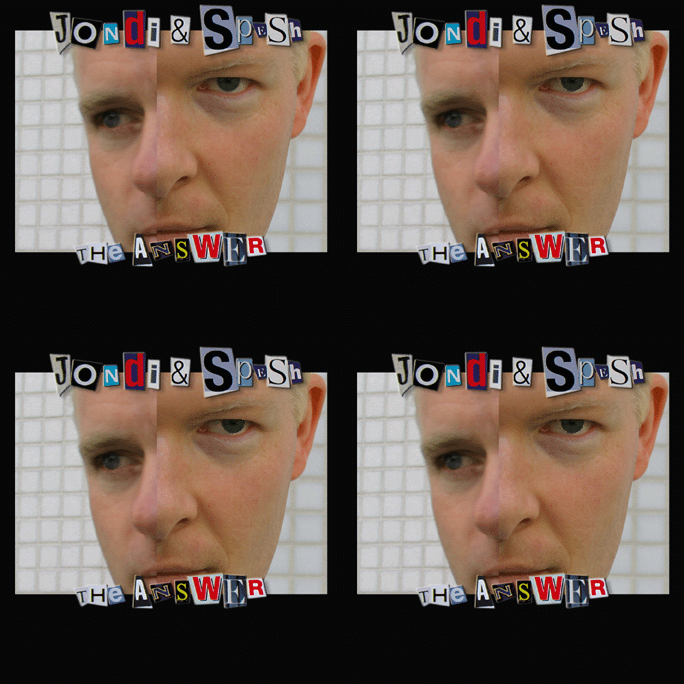
Around 2004 our music careers came to something of a fork.  We released an album on Spundae Records called The Answer.  It got some good reviews, but never really took off.  I’m still proud of that album, but it veered away from the known dance music genres, and some people didn’t know what to make of it (maybe the incredibly weird cover art had something to do with that).  Spesh and I toured the U.S. (supported by Spundae), and then did a self-organized tour in Europe that was both fun and exhausting.  I knew for myself at that point that I didn’t want to pursue the possibility of becoming an international superstar DJ (even though we had a pretty good start!).  It just wasn’t for me.

Spesh continued to pursue his own DJ career, and together we continued to promote Qoöl and run Loöq Records.  For a time, producing as Jondi & Spesh fell by the wayside.  I was burning studio time on my other music project — Momu — and Spesh was spending hours and hours listening to tracks and making mixes.  In addition to all the music stuff, we’re also both married guys, and work other gigs for money (I do database/programming work, and Spesh is a freelance advertising producer).

Excuses?  No way!  We were just taking a breather until we figured out what we wanted to do next.  After almost twenty years of producing dance music, we were both ready to try something different.  The “different” turned out to be a complete change of direction — we started experimenting in the studio with some ambient tracks.  Using parts from previously produced tracks, we deconstructed and reconstructed our way into an entirely new album.

The result is “Angles of Estrangement,” out today on iTunes, amazon.com, Beatport, and everywhere else.  For now it’s a digital only release, though we might follow up with a CD release (and I wouldn’t rule out vinyl if it does well).

The music came together quickly and easily — it was a blast to produce.  That said, we were extremely meticulous in the mixdown phase, working to get the feel of each track just right.  We made every single track on the album seamlessly loopable; each one starts exactly where it begins.  The original idea was that the music could be used to accompany art installations.  From the (rather dramatic) press blurb:

This album is comprised of previously published material that has been radically altered. Certain rules were applied to the re-composition process. For each of the “songs” in this collection, elements of soft and loud were deliberately used in search of contrasts designed to provoke the listener. There is little or no percussion. Each composition contains a dramatic arc, and within that arc, an event. Each piece begins exactly where it ends, and thus can be played in an endless loop.

Individual interpretations guide the listener.

Uses for these compositions stretch beyond the simple delivery of sensation or emotion. They are also meant to accompany life’s occurrences as alternate soundtracks to common events or carefully constructed realities such as films or other works of art.

Let us know what you think about the project.  It’s a new direction for us — a real break from the pounding four-on-the-floor stuff we’ve been doing for years.  I’d love to know what you think.

Oh yeah … you can download the 14 page digital booklet right here.  Enjoy!

ANGLES OF ESTRANGEMENT — SOME FULL-LENGTH PREVIEWS:

Second Sky

Back Alive

Underneath It All

Big Air

Gone for Days

I Drank It

BUY ALBUM ON:  iTunes | Amazon | Beatport

Also available on Juno, eMusic, and your favorite digital outlet.

Page 98 of 106

Powered by WordPress & Theme by Anders Norén